Visiting Jewish Heritage Sites in Morocco: A Practical Travel Guide
Morocco offers an extraordinary opportunity to discover the history and traditions of its Jewish communities. Across the country, historic synagogues, traditional Jewish neighborhoods, ancient cemeteries, and cultural museums preserve important memories of a heritage that developed over many centuries.
For travelers interested in Jewish history, ancestry, architecture, and religious traditions, visiting Jewish heritage sites in Morocco can be one of the most meaningful cultural experiences in North Africa.
From the historic Mellahs of Fez and Marrakech to the Atlantic heritage of Essaouira and the Museum of Moroccan Judaism in Casablanca, each destination offers a different perspective on the relationship between Jewish communities and Moroccan society.
However, planning this type of journey requires more than simply choosing which cities to visit. Travelers should also consider opening hours, access to religious sites, transportation, local customs, and the availability of specific religious services.
This guide explains what to see, how to organize your visits, and how to make the most of a Jewish cultural journey through Morocco.
Why Visit Jewish Heritage Sites in Morocco?
Jewish communities have been part of Moroccan history since antiquity. Their cultural influence became particularly significant through centuries of interaction with Amazigh, Arab, Andalusian, and other communities.
The arrival of Sephardic Jews following the expulsions from Spain in 1492 and Portugal in the following years further enriched the country’s Jewish traditions.
Over time, Jewish communities developed throughout Morocco, from major imperial cities to small towns and villages in the Atlas Mountains and southern regions.
Today, visitors can discover this heritage through several types of historical attractions:
- Historic synagogues and religious buildings.
- Traditional Jewish quarters known as Mellahs.
- Jewish cemeteries and important religious tombs.
- Museums documenting Jewish life and traditions.
- Historic homes and buildings associated with Jewish communities.
- Traditional markets and neighborhoods connected to former Jewish commercial activities.
One of the most interesting aspects of visiting Morocco is discovering how Jewish heritage forms part of the country’s broader cultural identity.
The Most Important Jewish Heritage Destinations in Morocco
A Jewish heritage journey can include several destinations depending on your available time and personal interests.
The following cities are particularly interesting for visitors who want to explore historic Jewish sites.
1. Casablanca: Discover the Museum of Moroccan Judaism
Casablanca is an excellent starting point for travelers interested in Moroccan Jewish culture.
The city has historically been an important center of Jewish life and continues to have an active Jewish community.
The main attraction for heritage travelers is the Museum of Moroccan Judaism, an institution dedicated to preserving and presenting the history, traditions, and cultural contributions of Moroccan Jews.
Its collections include religious objects, traditional clothing, photographs, historical documents, and examples of everyday Jewish life.
Another important landmark is Temple Beth-El, known for its distinctive architecture and stained-glass windows.
Visitors can also explore historic Jewish neighborhoods and cemeteries, subject to local access arrangements.
Travel tip: Allow sufficient time for the museum and its collections. Check its opening schedule before visiting, particularly around religious holidays.
2. Fez: Explore the Historic Jewish Mellah
Fez is one of Morocco’s most fascinating destinations for Jewish heritage.
Its Jewish quarter, located in Fez El Jadid, developed during the Marinid period and became an important center of religious, commercial, and family life.
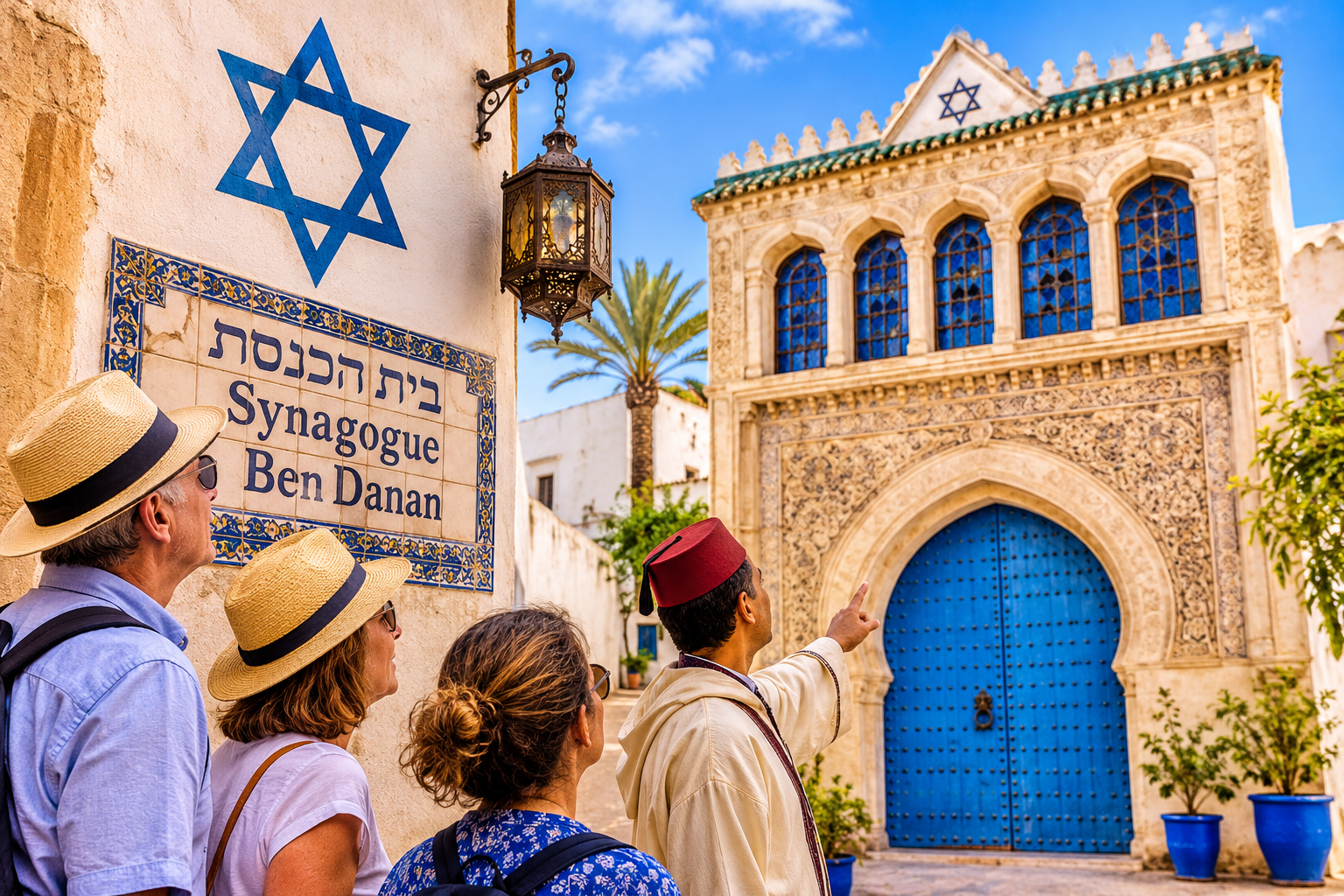
One of the most remarkable monuments is the Ibn Danan Synagogue, an important example of Moroccan Jewish religious architecture.
The historic Jewish cemetery is another significant place to visit. It contains the tombs of respected religious figures and preserves the memory of generations of Jewish families.
Walking through the Mellah allows visitors to discover the architecture, streets, and historical environment of a community that contributed significantly to the city’s development.
Fez is particularly interesting for travelers who want to understand the relationship between Moroccan Jewish traditions and the wider history of the imperial cities.
3. Marrakech: Visit the Historic Mellah and Lazama Synagogue
Marrakech offers another fascinating perspective on Jewish heritage.
The city’s Mellah was established during the Saadian period in the sixteenth century and became an important center of Jewish commercial and religious activity.
One of the most interesting landmarks is the Lazama Synagogue, also known as Slat Al Azama.
Visitors can also explore the Miâara Jewish Cemetery, which preserves the memory of many generations of Moroccan Jewish families.
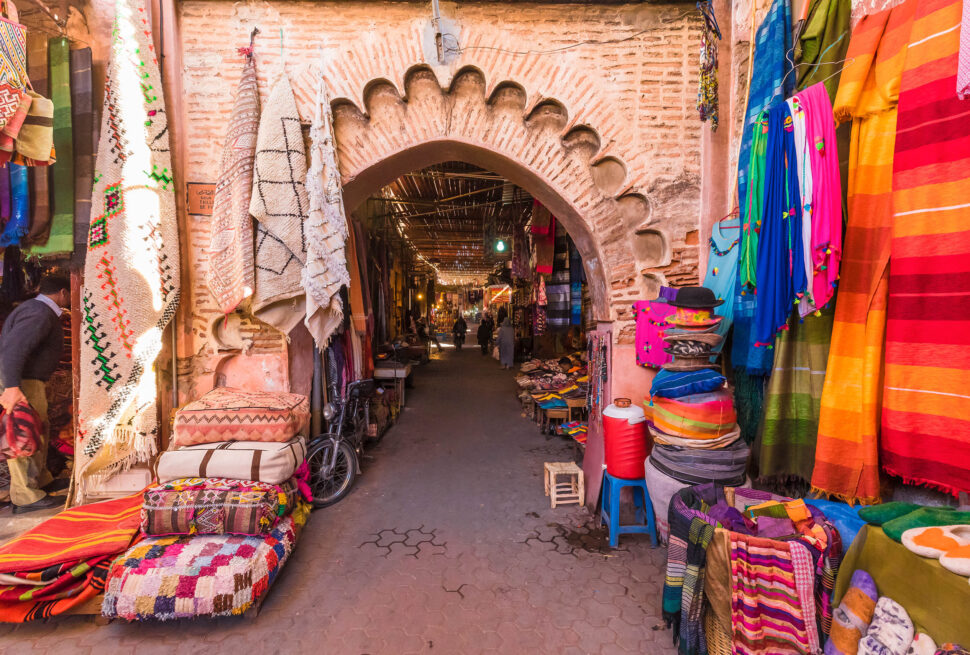
The surrounding neighborhood offers opportunities to discover traditional architecture, historic markets, and the commercial history of the Mellah.
The nearby Bahia Palace and other historical monuments can also be included in a broader cultural visit to Marrakech.
Travel tip: Combine the Jewish Mellah with a guided exploration of the Medina to understand the historical relationship between different communities in the city.
4. Essaouira: Discover the Jewish Heritage of Mogador
Essaouira, historically known as Mogador, is one of Morocco’s most distinctive coastal destinations.
During the eighteenth and nineteenth centuries, Jewish merchant families played an important role in the city’s international commercial development.
The historic Mellah preserves memories of this period, while several religious and historical sites reflect the importance of the former Jewish community.
The Haim Pinto Synagogue is particularly associated with the city’s religious heritage.
Another important landmark is the Jewish cemetery, located near the Atlantic coastline.
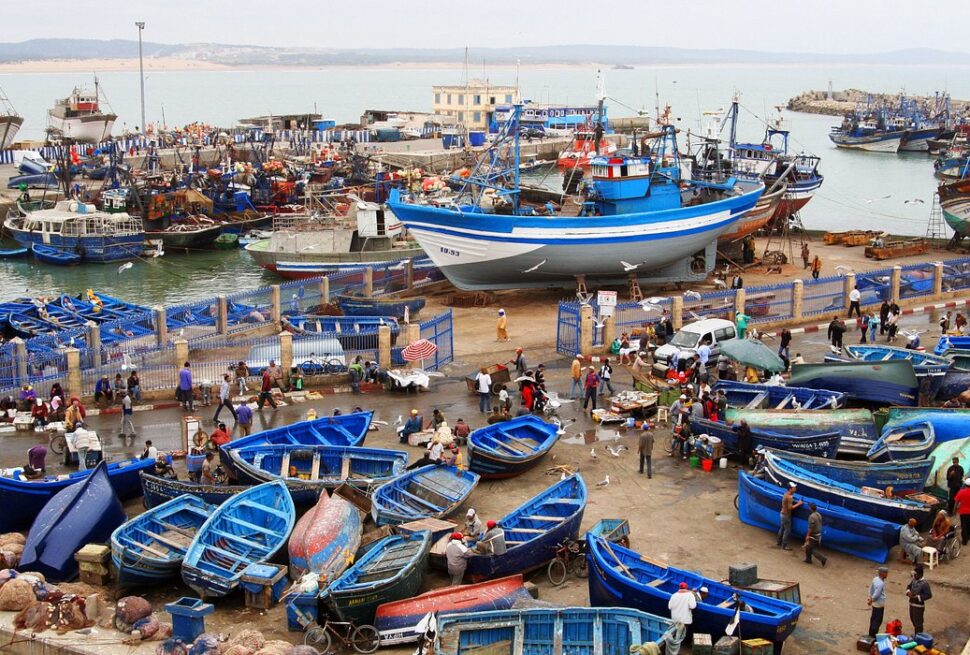
Visitors interested in history and architecture can also explore the city’s historic ramparts, traditional port, and old Medina.
Essaouira is an excellent destination for travelers who want to combine Jewish cultural discovery with coastal scenery, traditional Moroccan cuisine, and a relaxed atmosphere.
5. Meknes and Ouezzane: Discover Religious Heritage Beyond the Main Cities
Travelers with additional time can explore other locations connected to Moroccan Jewish religious traditions.
Meknes has a long Jewish history, including historic Mellah neighborhoods, synagogues, and important religious sites.
Ouezzane is particularly associated with Rabbi Amram Ben Diwan, whose tomb became an important pilgrimage destination for Moroccan Jews.
These destinations provide a deeper understanding of the geographical diversity of Jewish heritage in Morocco.
Visits should be organized in advance, especially when religious sites are located outside the main tourist areas.
What Should You Know Before Visiting a Synagogue in Morocco?
Visiting historic synagogues can be an important part of a Jewish heritage journey. However, access conditions differ from one location to another.
Some synagogues welcome visitors regularly, while others may have restricted opening hours or require prior arrangements.
Before your visit, consider the following recommendations:
Confirm opening hours: Do not assume that every synagogue is open daily. Contact the relevant institution or arrange a visit through a knowledgeable local guide.
Respect religious customs: Dress appropriately and follow any instructions provided by the site’s representatives.
Photography: Always ask permission before photographing religious interiors, individuals, or private areas.
Restoration work: Some historic buildings may temporarily close for maintenance or renovation.
Religious holidays: Opening schedules can change during Jewish holidays and Shabbat.
A knowledgeable guide can help organize visits and provide historical context that may not be available through signs or written information.
Jewish Cemeteries and Religious Pilgrimage Sites
Jewish cemeteries are among the most meaningful historical places to discover in Morocco.
They preserve the memory of important religious personalities, families, and communities that contributed to Moroccan Jewish life.
Several sites are also connected with the tradition of Hiloula, a religious pilgrimage commemorating respected rabbis and saints.
Among the best-known religious figures associated with Moroccan Jewish heritage are Rabbi Haim Pinto of Essaouira, Rabbi Amram Ben Diwan of Ouezzane, and Rabbi David Benmidan of Meknes.
For visitors interested in religious history, these sites provide a deeper understanding of the spiritual traditions maintained by Moroccan Jewish communities.
It is important to approach cemeteries and pilgrimage locations respectfully. Some are active religious sites, and visitors should follow local guidance regarding access, photography, and appropriate behavior.
Can Jewish Travelers Find Kosher Food and Shabbat Services in Morocco?
Travelers observing Jewish dietary requirements or religious practices should plan these arrangements before arriving in Morocco.
Kosher dining options may be available in certain cities, particularly Casablanca and Marrakech, but availability can vary.
It is advisable to confirm the following details in advance:
- Whether a restaurant currently offers certified kosher meals.
- Whether advance reservations are necessary.
- Whether kosher catering can be arranged at the accommodation.
- Whether Shabbat services are available during your stay.
- Whether suitable arrangements can be made for religious observance during transportation and overnight stays.
Travelers should not assume that a hotel or restaurant offers kosher services simply because it welcomes Jewish visitors.
For Shabbat, advance coordination is particularly important. The availability of accommodation within walking distance of a synagogue and other practical requirements should be discussed before confirming the itinerary.
A personalized travel plan can help make these arrangements easier and reduce unnecessary complications during the journey.
How Many Days Do You Need for a Jewish Heritage Trip in Morocco?
The ideal duration depends on the destinations you want to visit.
A short journey can focus on one or two cities, while a more extensive itinerary allows travelers to discover several historical regions.
Here are three possible approaches:
A 3 to 4-Day Jewish Heritage Visit
This option is suitable for travelers with limited time.
A possible itinerary could include Casablanca, Fez, or Marrakech, depending on the arrival airport and personal interests.
It allows visitors to discover important Jewish historical sites without traveling across the entire country.
A 7 to 10-Day Cultural Journey
A longer itinerary can connect Casablanca, Rabat, Fez, Marrakech, and Essaouira.
This option provides a broader understanding of Moroccan Jewish history while allowing time to discover traditional architecture, local markets, and other cultural attractions.
A 12 to 14-Day Jewish Heritage Experience
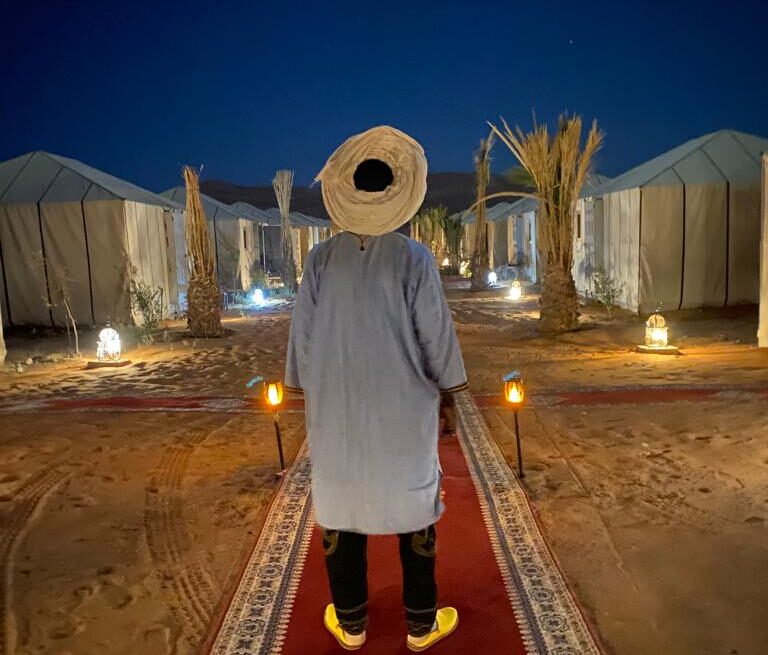
For travelers seeking a more comprehensive journey, a longer itinerary can include northern Morocco, imperial cities, southern villages, religious pilgrimage locations, and the Sahara Desert.
This type of journey combines Jewish heritage with the country’s extraordinary geographical and cultural diversity.
You can explore our 14-Day Morocco Jewish Heritage Tour for an example of a route connecting several important historical destinations.
Transportation and Private Travel in Morocco
Morocco is a geographically diverse country, and the distances between historical destinations can be considerable.
For example, traveling between Casablanca, Fez, Marrakech, and Essaouira requires careful planning, especially when visiting several sites along the way.
Private transportation is a practical option for travelers who want greater flexibility and a journey adapted to their interests.
A private vehicle with a professional driver allows you to:
- Choose the destinations and duration of each visit.
- Stop at historical locations along the route.
- Travel comfortably between cities.
- Adjust the itinerary according to opening hours.
- Include additional cultural experiences.
- Organize transportation around specific religious requirements where possible.
If you are planning a multi-city journey, discover our private Morocco transfer services.
You can also explore our Morocco travel tips and practical advice to prepare for your visit.
How to Choose the Right Jewish Heritage Experience
Not every traveler has the same interests.
Some visitors are primarily interested in the history of Sephardic communities, while others want to explore synagogues, visit religious tombs, discover family roots, or learn about Moroccan Jewish traditions.
Before choosing an itinerary, consider:
Your historical interests: Decide whether you prefer museums, religious architecture, historic neighborhoods, or pilgrimage locations.
Your available time: Select a route that allows enough time to explore each destination without spending most of the trip on the road.
Religious requirements: Communicate your kosher and Shabbat requirements before booking.
Accessibility: Confirm whether the sites you want to visit are open and accessible.
Guiding services: Choose knowledgeable local professionals who can explain the historical background and cultural significance of the places you visit.
A well-organized journey should balance historical discovery, comfortable transportation, and enough free time to enjoy each destination.
Experience Morocco Through Its Jewish Heritage
Discovering Jewish heritage in Morocco means exploring much more than historic buildings. It means understanding the stories, traditions, and people who contributed to the country’s cultural identity.
From the synagogues of Fez and Marrakech to the Jewish Museum in Casablanca and the historic cemetery of Essaouira, each destination reveals a different chapter of this remarkable heritage.
For travelers seeking a meaningful cultural experience, Morocco offers the opportunity to explore centuries of history while discovering its cities, landscapes, architecture, and traditions.
At EMA Travel Morocco, we help travelers organize private and personalized journeys throughout the country, including visits to important Jewish historical destinations.
Whether you are interested in a short cultural excursion or a comprehensive journey across Morocco, our team can help create an itinerary adapted to your interests and travel schedule.
Start planning your journey and discover the remarkable Jewish heritage of Morocco.
Visit EMA Travel Morocco to learn more about our travel experiences and personalized itineraries.
Frequently Asked Questions About Visiting Jewish Heritage Sites in Morocco
1. What are the most important Jewish heritage sites in Morocco?
Some of the most important sites include the Museum of Moroccan Judaism in Casablanca, Ibn Danan Synagogue in Fez, Lazama Synagogue in Marrakech, and the historic Jewish cemetery and Haim Pinto Synagogue in Essaouira.
2. Can non-Jewish visitors enter synagogues in Morocco?
Some synagogues welcome visitors regardless of religion. However, access depends on individual site policies, opening hours, and local arrangements. Advance confirmation is recommended.
3. Is there a Jewish museum in Casablanca?
Yes. The Museum of Moroccan Judaism in Casablanca documents the history, religious traditions, and cultural contributions of Jewish communities in Morocco.
4. Where can I find the historic Jewish quarters in Morocco?
Historic Mellahs can be found in cities including Fez, Marrakech, Essaouira, Casablanca, and Meknes. Each has its own architectural and historical characteristics.
5. Are kosher restaurants available in Morocco?
Kosher dining options can be found in certain Moroccan cities, particularly Casablanca and Marrakech. However, travelers should confirm current availability and certification before their visit.
6. Can I visit Jewish pilgrimage sites in Morocco?
Yes. Several religious sites associated with respected Moroccan rabbis can be visited, including locations connected with Rabbi Haim Pinto and Rabbi Amram Ben Diwan. Access and local arrangements should be confirmed beforehand.
7. What is the best time of year to visit Jewish heritage sites in Morocco?
Spring and autumn are generally comfortable periods for exploring Moroccan cities and historical sites. However, visitors should also consider Jewish religious holidays, Shabbat schedules, and the opening arrangements of individual attractions.
8. Can I organize a private Jewish heritage trip in Morocco?
Yes. Private itineraries can be arranged according to your interests, available time, and preferred destinations. They can include historical neighborhoods, synagogues, museums, cemeteries, and other cultural attractions.
9. How long should I spend exploring Jewish heritage in Morocco?
A few days are sufficient for visiting one or two cities, while a 10-to-14-day itinerary allows travelers to discover a wider range of historical destinations across the country.
10. Is Morocco suitable for travelers interested in Sephardic heritage?
Yes. Morocco has an important Sephardic heritage, particularly following the arrival of Jewish communities from Spain and Portugal. Historic neighborhoods, religious traditions, architecture, and museums provide opportunities to explore this history.